 Polski
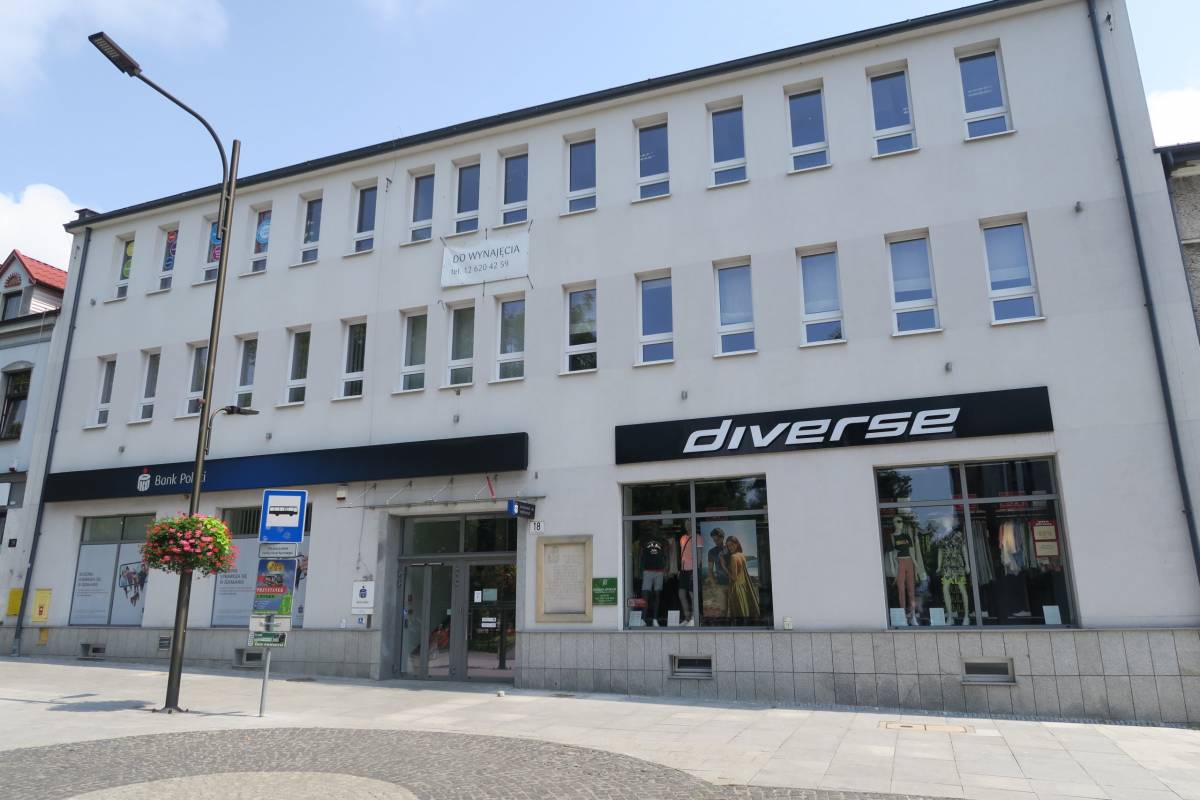
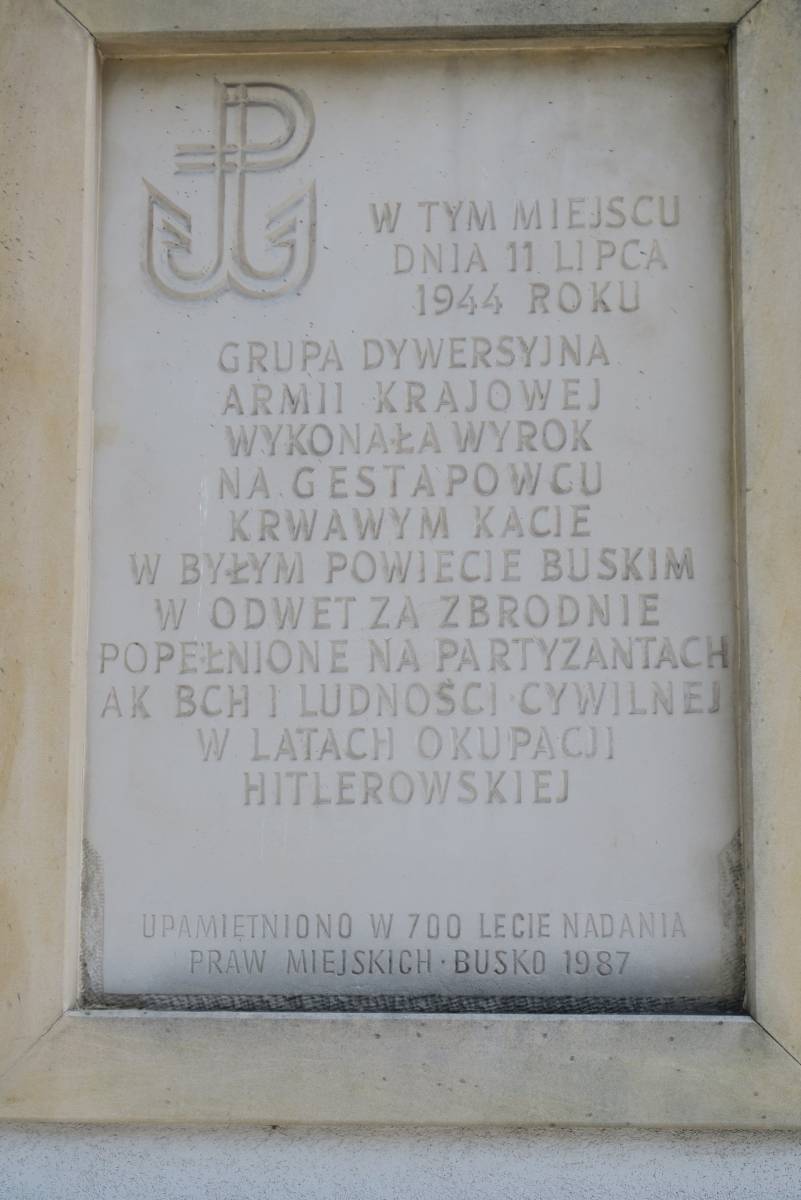

Place of execution of the death sentence on the head of the Busko Gestapo by a subversive group of the Home Army.
Plac Zwycięstwa 14 (Victory Square) in Busko-Zdrój marks a unique landmark on the city’s historical map. It was here, in the very heart of the town, that soldiers of the Home Army (Armia Krajowa – AK) executed one of the most spectacular liquidation operations within the local ZWZ-AK District, eliminating Max Peter, notoriously known as the "Executioner of the Busko District."
Who Was Max Peter?
Max Peter was an officer of the German Security Police (Sicherheitspolizei) and a symbol of the brutal terror inflicted upon Busko-Zdrój starting in the summer of 1943. Prior to his deployment here, his record included participating in the liquidation of the Jewish ghetto in Ostrowiec Świętokrzyski. In Busko, he quickly gained notoriety for his extreme sadism. He personally tortured prisoners during interrogations and served as the primary executioner during mass killings in the Wełecki Forest and at Dr. Byrkowski’s villa. Due to his relentless cruelty, the Polish Underground Special Military Court sentenced him to death.
The Course of the Diversionary Operation
The order to liquidate the Gestapo officer was issued in March 1944 by the Commander of the Busko AK District, Major Wacław Ćmakowski, codenamed "Srogi." Given the target’s extreme vigilance and the challenging local conditions—including a heavy concentration of German military garrisons within the spa resort—initial attempts in June and early July failed. One attempt was called off at the very last moment by the command out of concern for civilian casualties among churchgoers leaving a nearby mass.
The final, successful assassination took place on Wednesday, July 12, 1944, at 9:30 AM (although the official commemorative plaque and German death records erroneously state July 11). Home Army intelligence monitored the target’s every move. As Peter and another Gestapo officer, Kühn, were returning from the sulfur baths and crossing the market square, a chain of signals was passed among the underground couriers.
The primary executioners of the sentence were Piotr Pałys, codenamed "Kruk," and Jan Grochowski, codenamed "Śmietana." The resistance fighters opened fire in the market square park. Although wounded, Peter attempted to flee toward a nearby agricultural-commercial cooperative building. However, just before reaching the entrance, "Kruk" shot him in the head, and "Śmietana" delivered the final neutralizing shots. The second German, Kühn, managed to escape despite being wounded. Other German soldiers stationed nearby were so caught off guard that they sought cover in the local post office and failed to engage. The Home Army liquidation unit successfully withdrew from the town without sustaining any casualties.
Tragic Retaliation and Remembrance
The successful assassination provoked a furious reaction from the occupying forces. German troops cordoned off the town and carried out mass arrests. A week later, on July 19, 1944, 29 hostages were executed in retaliation in the Wełecki Forest.
Today, this dramatic event is commemorated by a memorial plaque mounted at the site of the operation. It stands as a testament to the bravery of the Polish Underground and a reminder that war crimes do not go unpunished.